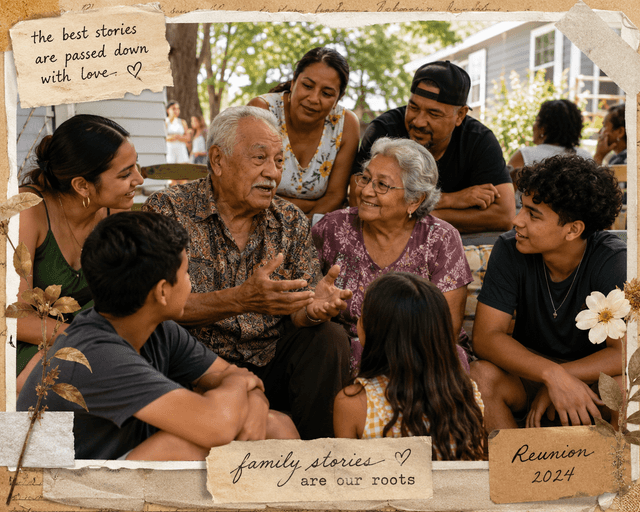
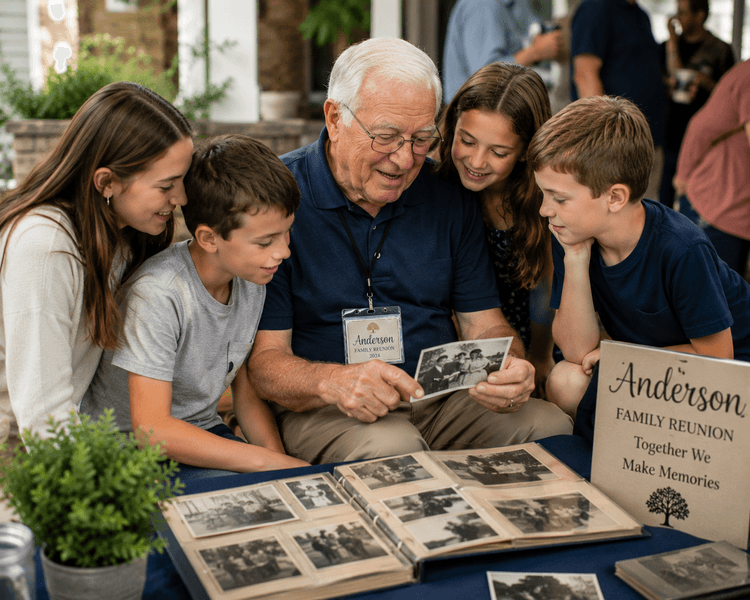
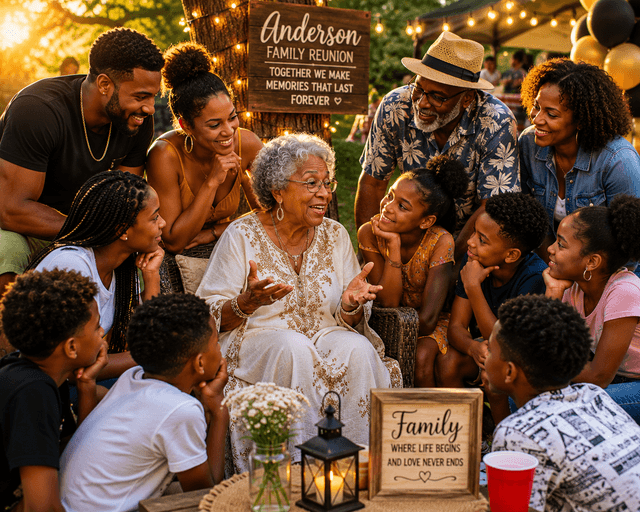
Plan today. Connect forever. Create memories that last for generations.
Our Legacy. Our Story. Our Family. ♡
Prefer a printable version?
Download the complete Family Reunion Planning Guide as a beautifully formatted PDF you can print, share, and use while planning your reunion.
Your go-to resource for a stress-free reunion.
Our guide includes timelines, budgeting tips, invitation ideas, activity inspiration, and more to help you plan with confidence and bring your family closer together.
Planning a family reunion is about much more than organizing a weekend event. It is about reconnecting generations, preserving family stories, strengthening relationships, and creating memories that will last long after everyone goes home.
At its best, a reunion reminds people where they come from and who they belong to. Cousins reconnect. Children meet relatives they have only heard about. Elders share stories that might otherwise be lost with time. Those moments matter.
At the same time, reunion planning can feel overwhelming. Between choosing dates, managing budgets, coordinating travel, collecting RSVPs, planning activities, and communicating with dozens of relatives, it is easy for organizers to feel stressed before the reunion even begins.
This guide was created to help simplify the process.
Inside, you will find practical advice, planning frameworks, budgeting tips, activity ideas, communication strategies, checklists, and lessons learned from real family reunions. Whether you are planning your very first reunion or organizing your fifth, this guide is designed to help you create an event that feels meaningful, organized, and welcoming for every generation.
Most importantly, remember this: the goal is connection, not perfection.
Your family will not remember whether every detail went exactly according to plan. They will remember the conversations, the laughter, the stories, the photographs, and the feeling of being together. That sense of connection is what you are really building.
FamConnections was created to help families continue those connections beyond the reunion itself. Families can stay connected in a private, invitation-only family network where they can organize reunions, manage RSVPs, share photos and videos, preserve stories and memories, and build a living family tree together over time. We hope this guide helps you create a reunion your family will remember for years to come.
Happy Planning!
The FamConnections Team
Welcome
Welcome: Why this guide, why now
Planning a family reunion is part party, part travel agency, and part labor of love. You're not just booking a venue, you're creating a few precious days where cousins meet cousins, stories get passed down, and a generation of kids learns where they came from.
This guide is written for two kinds of planners:
First-timers: If you've never planned a reunion before, follow the chapters in order. By the end, you'll have a plan you can realistically put into action.
Seasoned planners: If you already know the basics, focus on the “Pro Tip” and “Watch out for” callouts, where many of the practical lessons and insights are shared.
A family reunion is a little like throwing a wedding for fifty of your favorite relatives, except half of them have not seen each other in a decade and a quarter of them have very strong opinions about the menu. The good news: with a plan, a team, and a few smart tools, you can pull it off without losing your weekends to a thousand text threads.
How to use this guide
Work through the chapters chronologically the first time.
Download the FamConnections Family Reunion Checklist as your running to-do list.
Adapt freely because every family is different. Use these frameworks as flexible guidance rather than strict rules.
Pro Tip
Download and print the FamConnections Family Reunion Checklist and tape it to your fridge. Physically crossing items off the list can be surprisingly motivating, and it also serves as a visible reminder to the rest of your household that the reunion is really happening.
1
Start Here: The Planning Foundation
Before you do anything else, including picking a date, counting attendees, or debating whether Aunt Linda's potato salad counts as a side dish, focus on getting these three things right. They will make every later decision much easier.
Build a planning team
Don't plan a reunion alone. You'll burn out, and you'll resent the family by the time it actually happens. Aim for three to five people across two or three branches of the family.
A good planning team usually has these roles, though one person can wear two hats:
Lead organizer: Keeps the timeline moving, runs the meetings, makes final calls when consensus stalls.
Treasurer: Tracks the budget, collects contributions, pays vendors.
Communications lead: Manages the family list, sends updates, handles RSVPs.
Activities coordinator: Designs the program, sources games and entertainment.
Aim for representation across generations. A planning team made up only of cousins in the same age group may unintentionally create a reunion that overlooks teenagers and grandparents. Including at least one person from each generation, even informally, helps keep the program inclusive and balanced.
Set goals before you set dates
Spend twenty minutes with your team asking: what is this reunion for? The answers shape everything that follows.
Reconnecting branches that have drifted apart?
Honoring an elder while they're still with you?
Introducing the next generation of cousins to each other?
Celebrating a milestone such as a 50th anniversary, a centennial, or a homecoming?
Building or sharing the family story for descendants?
Write down your top two goals. Every later decision, including the venue, budget, activities, and reunion length, should support those goals.
Lay out a 12-month timeline
Most successful family reunions are planned over 9–12 months. Here's the high-level view (you can also download the detailed FamConnections Family Reunion Checklist).
Time before
Focus
12 months
Form the team, define goals, set the date window, draft the budget.
9 months
Confirm venue, lock the date, send save-the-dates, open contributions.
6 months
Send formal invitations, finalize lodging blocks, plan activities.
3 months
Collect RSVPs, confirm vendors, design the program, plan logistics.
1 month
Send the day-of schedule, confirm all bookings, prep materials.
1 week
Headcount confirmations, weather plan, final reminders, packing list.
Day-of
Set up early, take care of yourself, delegate, breathe.
2
Budgeting Your Reunion
Money conversations are the part most planners dread. Get them out of the way early and openly, and the rest of the planning gets easier. Nobody likes being surprised by costs in month nine.
Estimate your major costs
Costs vary widely depending on the location and the scale of the reunion, but most events include many of the same budget categories. Use this table as a starting point and update it with pricing and quotes from vendors in your local area.
Category
What to plan for
Typical range (50 people)
Venue rental
Park pavilion, hall, hotel ballroom, family property
$0–$3,000
Food and beverage
Catering, potluck supplies, drinks, snacks
$500–$3,500
Lodging support
Group rate negotiating, shared house, helping elders
Varies
Activities and entertainment
Games, photographer, DJ, kids' supplies, prizes
$200–$1,500
Printed materials
Invitations, name tags, program, photo book
$100–$500
T-shirts or favors
Optional, but often popular with families and helpful for creating more unified group photos.
$10–$25/person
Cushion (10–15%)
Unexpected costs always show up
Calculate after totals
Funding the reunion
Most family reunions blend a few funding sources. Pick a mix that fits your family's culture.
Per-person contributions: Split costs across households. Simple, fair, transparent.
Per-household fees: Easier on big families with lots of kids; couples without kids pay the same as families.
Sliding scale: No one is turned away. Anonymous bucket for those who can give more.
Family fundraisers: A t-shirt presale, a silent auction of donated items, a cookbook of family recipes.
Sponsorship: An individual family member, a branch of the family, or a family-owned business may choose to sponsor a specific reunion expense, such as the photo booth, cake, or t-shirts.
Pro Tip
Open a dedicated checking account or a free shared digital wallet for the reunion. Never run reunion money through your personal account. If anything ever goes sideways, you want a clean paper trail you didn't have to invent.
Watch out for
Money-related disagreements are one of the most common reasons planning teams experience conflict. Decide on your funding approach and determine how budget shortfalls will be handled before collecting any money. Document the plan clearly and share it with everyone involved.
3
Picking the Right Date and Place
Finding a date that (mostly) works
You will not find a date that works for every single person. Don't try. Aim for a date that works for the most people, especially the elders whose presence makes the reunion what it is.
Start with a 2–3 month window, then narrow.
Avoid the obvious conflicts: school start, religious holidays specific to your family, big regional events.
Consider shoulder seasons (late spring, early fall) for better venue pricing and milder weather.
Use a simple online poll. Pick three candidate weekends and let people rank them. Decide in two weeks; longer drags it out.
Pro Tip
Lock in the reunion date as early as possible, even if the venue has not been finalized yet. Many people plan vacations and work travel six to nine months in advance, and having a confirmed date is one of the most effective ways to improve attendance.
Choosing the right venue
Choose a venue that fits your family’s size, style, and needs instead of trying to make your family fit the venue. For some families, a backyard gathering works perfectly, while others may benefit from the structure and convenience of a hotel or event space.
Casual all-day events, lots of kids, mixed budgets
Books early, weather risk, no walls
Community center or church hall
Mixed-generation comfort, indoor backup
Less character, may require kitchen rental
Hotel with meeting space
Out-of-town families, multi-day events, elders
Higher cost, room blocks, food minimums
Vacation rental cluster
Multi-day immersion, families staying together
Logistics-heavy, security deposits
Destination resort or cruise
Milestone reunions, multi-generation vacations
Highest cost, attendance filter
Don't forget accessibility
If you want elders and family members with mobility, hearing, or dietary needs to actually attend, accessibility isn't optional. Before booking, walk the venue yourself. Check for:
Step-free entry, accessible restrooms, and clear paths.
Seating in shaded or indoor areas for breaks.
Parking close to the entrance for those who need it.
Quiet spaces for napping kids, nursing parents, or anyone overwhelmed.
Sound systems that help hard-of-hearing family hear toasts and announcements.
Watch out for
Read the cancellation and weather policies carefully before signing any agreement. This is especially important for outdoor reunions, where weather conditions can quickly affect plans. Make sure you understand exactly what happens if there is a storm or severe weather, and ask whether the venue offers a rain-date option for an additional fee.
4
Arranging Lodging for Out-of-Town Guests
For many reunions, one of the biggest planning responsibilities is helping out-of-town guests find comfortable, affordable lodging options.
Thoughtful lodging coordination helps improve attendance, reduce confusion, simplify transportation, and create more opportunities for family connection throughout the reunion weekend.
Start lodging planning early
For larger reunions, lodging arrangements should ideally begin 9–12 months before the reunion for major destinations and 6–9 months before smaller reunions.
Popular lodging options
Hotels
Hotels work well for large family groups, urban reunions, and airport-accessible destinations. Many hotels offer discounted group room blocks, reunion packages, and event coordination support.
Cabins & lodges
Cabins and lodges create cozy shared experiences and work especially well for mountain reunions and outdoor retreats.
Vacation rentals & Airbnb options
Vacation homes and Airbnb properties work well for immediate families and cousin groups. Planners should verify occupancy limits, cancellation policies, parking availability, and proximity to reunion activities.
How to negotiate group lodging rates
Many hotels and lodging providers offer discounted group rates for family reunions, especially when reserving multiple rooms or booking during slower travel periods.
Work with a group sales coordinator
Most hotels have group sales managers or event coordinators who can help planners reserve room blocks, negotiate pricing, create custom booking links, coordinate guest reservations, and manage reservation deadlines.
Questions to ask lodging providers
Is there a group discount available?
How many rooms are required for discounted pricing?
What is the reservation deadline?
Can guests reserve rooms individually?
Is breakfast included?
Is parking included?
Is the property senior-friendly?
Reservation link & discount code tips
Provide attendees with direct reservation links, custom booking codes, room block deadlines, transportation details, hotel phone numbers, and parking information to simplify the booking process.
Group rate negotiation strategies
Book early for better pricing.
Compare quotes from multiple properties.
Ask about complimentary perks such as breakfast or meeting rooms.
Be flexible with dates.
Estimate room volume accurately.
Lodging coordination checklist
Research lodging options.
Contact group sales coordinators.
Compare group rates.
Reserve room blocks.
Request custom booking links.
Share reservation deadlines.
Send reminder communications.
A Note On Lodging Coordination
To make travel planning easier for out-of-town guests, consider sharing lodging details in a central, easy-to-access location. With FamConnections, reunion planners can organize hotel options, group rates, discount codes, reservation links, pricing details, and booking instructions directly within the reunion planning experience. This helps families keep important travel information, updates, and event details organized in one place.
Half of reunion planning is communication. Between save-the-dates, invitations, updates, address changes, email updates, RSVPs, dietary requests, and even song requests for Uncle Mike’s playlist, there is a constant flow of information coming from many different directions.
The planners who stay sane share one thing in common: they pick a single home for reunion information and they protect it. One source of truth. Everywhere else is a pointer back to it.
Build (and clean) your family list
Start with a shared spreadsheet of every household: contact name, email, phone, mailing address, number of attendees expected, dietary notes.
Have the elder from each family branch review their branch’s list, since they will often remember relatives or connections that were accidentally left out.
Update the list as you learn things. Treat it like a living document.
Protect it: this is sensitive family data. Don't share it more widely than you need to.
Decide how you'll communicate
Different families prefer different tools and communication styles. Choose the tools your family is most likely to use consistently, rather than selecting something simply because it is popular or trendy.
Email: Best for formal announcements and detail-heavy updates.
Group text or messaging: Good for quick reminders and casual chat, terrible for important details that need to be findable later.
Private social media groups: Popular and easy, but requires everyone to have a social media account and dilutes attention with the rest of the social feed.
A private family network: A dedicated, invitation-only space just for your family. No public posts, no ads, no algorithm. Keeps the reunion plan, the family list, the photos, and the conversations all in one place and visible only to family members.
RSVPs without losing your mind
Set a hard RSVP deadline 6–8 weeks before the event.
Make RSVP-ing as easy as possible. One click, one form. Don't make people search their email for an attached PDF.
Collect everything you need on the RSVP form: attendees by name, ages of kids, dietary restrictions, accessibility needs, lodging plans, t-shirt sizes.
Follow up personally with anyone who hasn't responded a week after the deadline. A phone call from a cousin gets more responses than a fifth email.
Pro Tip
Send updates on a consistent schedule, such as once a month until three months before the reunion, every two weeks after that, and weekly during the final month. A predictable communication rhythm helps family members expect the updates and reduces the chances of important information being overlooked.
A Note On Staying Connected
FamConnections is a private, invitation-only family network built specifically for families and family reunions. Your family list, RSVPs, photos, family tree, and conversations all stay together in one private place instead of being scattered across social media posts, email threads, and group texts.
FamConnections also helps reduce the administrative work that often falls on reunion planners. Automated RSVP reminders are sent to invited family members by email and text message, helping planners avoid repeated follow-up calls, texts, and emails while encouraging guests to respond on time.
It's free to sign up, no credit card required, and no technical skills are needed.
You’ve got the checklist. You’ve got the timeline. Now give your family one place to stay connected.
Create a free private family group with FamConnections to organize your reunion, share updates, coordinate details, and keep memories alive long after the event ends.
The activities are what people remember. Decades from now, no one will recall the venue's parking situation. They'll remember the talent show, the family Jeopardy game, the moment Grandpa told the story about the 1962 road trip.
Choosing a family reunion theme
A family reunion theme can help create excitement, unify decorations and activities, and make the event feel more memorable. Themes also make it easier to coordinate invitations, t-shirts, games, keepsakes, food ideas, and photo opportunities without having to make every decision from scratch.
One of the most effective approaches is to choose your reunion theme early in the planning process and then build your activities, decorations, meals, music, and experiences around that theme. Starting with the theme first creates a more connected and organized reunion experience because many later decisions become easier and more consistent.
For example:
A heritage theme may inspire storytelling activities, family tree displays, and traditional family recipes.
A beach or destination theme may shape games, dress styles, music, and excursions.
A decades theme can influence playlists, decorations, photo booths, and costume ideas.
That said, a theme should support the reunion, not create unnecessary stress or expense. Some of the best reunions use very simple themes or no formal theme at all.
Choose a theme that feels natural for your family’s personality, traditions, location, and budget.
Popular family reunion theme ideas
Family heritage theme
Celebrate your family’s roots, ancestry, and history. Ideas include:
Family tree displays
Heritage recipes
Storytelling sessions
Cultural music and traditions
“Where We Come From” photo boards
Decades theme
Choose a favorite decade such as the 70s, 80s, or 90s. Ideas include:
Decade-inspired outfits
Music playlists
Retro games and decorations
Costume contests
Hometown or homecoming theme
Perfect for reunions hosted in the family’s hometown or ancestral community. Ideas include:
Historic family photos
Local tours
“Back Where It All Began” signage
Community landmarks and storytelling
Vacation or destination theme
Great for beach reunions, mountain retreats, cruises, or resort gatherings. Ideas include:
Matching tropical shirts
Destination welcome bags
Travel-inspired activities
Group excursions
Family legacy theme
Focus on generations, memories, and preserving family stories. Ideas include:
Memory walls
Elder interviews
Legacy awards
Time capsule activities
“Passing It On” conversations between generations
Backyard cookout theme
Simple, casual, and budget-friendly. Ideas include:
Barbecue competitions
Lawn games
Potluck dishes
Picnic-style seating
Outdoor movie night
Reunion color theme
Some families skip a formal theme and simply choose family colors instead. Ideas include:
Coordinated t-shirts
Matching table decorations
Color-coded family branches
Group photos with coordinated colors
Theme planning tips
Choose the reunion theme early so activities, decorations, and planning decisions can naturally build around it.
Keep the theme easy to understand and simple to execute.
Avoid themes that require expensive costumes or decorations.
Make sure activities are enjoyable for all generations.
Use the theme consistently across invitations, signage, decorations, and keepsakes.
Focus on connection and participation more than visual perfection.
Pro Tip
The most successful reunion themes usually reflect something authentic about the family itself, such as heritage, traditions, shared memories, or personality. A meaningful theme will always feel more memorable than one chosen only because it looks good in photos.
Design for three audiences
Every reunion typically includes three main groups: kids, working-age adults, and elders. The most successful reunion programs include activities that encourage interaction between generations instead of keeping each group separated.
For kids
A craft station for making name tags, family-tree posters, or memory keepsakes.
Outdoor games such as sack races, scavenger hunts, and water balloon tosses are simple, low-technology activities that can be enjoyed by guests of all ages.
A teen-friendly zone with games and music so older kids don't feel babied.
A designated kid-watcher rotation so parents get to socialize.
For everyone
Family trivia: Categories like family history, baby photos, who-said-this. Crowd favorite, easy to run, sparks storytelling.
Photo scavenger hunt: A printed list of shots to capture (three generations in one photo, cousins who met today, oldest and youngest). Engages everyone, generates memorable photos.
Family talent show: Sign-up sheet ahead of time so it doesn't fall flat. Surprising what people will do when invited.
Group photo: Schedule it for early in the day before people drift off. Matching t-shirts make this iconic.
For elders and storytelling
Don't let elders sit at the edge of the day. Build the program around them. Their stories are why this reunion matters.
Story circle: Gather everyone, ask elders to share a memory each. Record audio with their permission.
Memory interviews: Pair teenagers with grandparents and great-aunts. The teen interviews, the elder talks. The recording is the gift.
Family tree wall: Print a large tree poster and have everyone sign their branch with a note. Becomes a keepsake.
Memorial moment: A quiet five minutes to remember family who couldn't be there or who've passed. Keep it simple and sincere.
Pro Tip
Do not over-schedule every moment of the reunion. Some of the best memories are created during unplanned moments, such as cousins talking on the porch, family gathering around the food table for second helpings, or a card game that unexpectedly lasts all afternoon. Leave room in the schedule for those natural interactions to happen.
A Note On Preserving Family Stories
Consider preserving these stories beyond the reunion itself. With FamConnections, families can upload recorded audio memories and attach them directly to a family member’s profile within the family tree. This creates a living archive where future generations can hear the voices, stories, and memories of their relatives for years to come.
The best family reunion games do more than entertain people. They:
create conversation,
encourage laughter,
help relatives reconnect,
and make new memories across generations.
Great reunion games should feel easy, inclusive, and low-pressure. Not everyone enjoys competitive activities, so offer a mix of active games, conversation games, trivia, team challenges, and relaxed social games.
Games for large family reunions
These games work especially well for reunions with 50+ attendees, multiple generations, and large outdoor or banquet-style gatherings.
Family trivia challenge
One of the most popular reunion games. Create trivia questions about:
grandparents
family traditions
hometown history
funny family memories
family sayings
old photographs
Pro Tip
Include younger generations on teams with elders so stories naturally get shared during the game.
Family scavenger hunt
Create a list of reunion challenges such as:
find cousins born in the same month
take a photo with three generations
locate a family member from another state
find someone who attended the very first reunion
This encourages interaction between relatives who may not know one another well.
Reunion bingo
Create custom bingo cards with family-themed prompts such as:
“Has traveled the farthest”
“First reunion attendee”
“Can cook the family recipe”
“Has the loudest laugh”
“Knew Grandma as a child”
This works especially well early in the reunion to help break the ice.
Family Olympics
Organize lighthearted competitions such as:
relay races
sack races
water balloon tosses
tug-of-war
spoon races
Keep the focus on fun instead of competition.
Lip sync or karaoke battle
Families love performances that create laughter and shared memories. Encourage:
branch competitions
multi-generational performances
funny throwback songs
dance-offs
These moments often become reunion highlights.
Games for small family reunions
Smaller reunions often create opportunities for deeper interaction and conversation.
Card tournaments
Popular options include Spades, Bid Whist, Uno, Phase 10, and Rummy. Card games naturally create conversation and storytelling.
Domino tournaments
A reunion classic for many families. Dominoes work especially well because:
elders often enjoy teaching younger generations,
games can run casually throughout the weekend,
and spectators naturally gather around the tables.
Family story circle
Gather family members in a circle and use prompts such as:
“What’s your funniest family memory?”
“What advice would you give younger generations?”
“What family tradition should never disappear?”
This becomes especially meaningful when stories are recorded.
Guess the family photo
Display childhood or vintage photos and have family members guess who is in each picture. This game works beautifully for all ages, storytelling, and preserving family history.
Memory match
Create a matching game using family photos, family couples, old reunion pictures, or family facts. Especially fun for younger children.
Outdoor reunion games
Perfect for park reunions, beach reunions, backyard gatherings, and outdoor retreats.
Cornhole tournament: Easy for all ages and encourages casual interaction.
Giant Jenga: Simple, social, and visually fun.
Water balloon toss: Especially great for summer reunions, families with kids, and outdoor parks and beaches.
Tug-of-war: Classic, competitive, and highly entertaining for spectators.
Family kickball or softball game: A reunion tradition for many families. Consider cousins vs. cousins, generations vs. generations, or family branches vs. family branches.
Games for elders and multi-generational inclusion
Some of the best reunion moments happen when elders actively participate. Avoid planning only high-energy activities.
Family advice cards
Have younger generations ask elders for life advice, relationship wisdom, career lessons, and favorite family memories. Collect the responses as keepsakes.
Storytelling interviews
Pair teens or children with grandparents for recorded conversations. This creates meaningful interaction, preserved memories, and stronger generational connection.
Name that relative
Use old photographs and family history clues to guess relatives from previous generations.
Low-pressure games for introverts
Not everyone enjoys loud or competitive activities. Offer quieter options too.
Conversation card decks: Use prompts such as “What family tradition means the most to you?”, “What reunion memory do you still remember?”, “What food always reminds you of family?”
Porch conversations: Sometimes the best “activity” is simply creating comfortable space for people to sit and connect naturally. Not every moment needs structure.
Pro Tip
The best reunion games are usually easy to explain, inclusive across generations, flexible, and focused on interaction rather than competition. Families remember laughter and connection far longer than scoreboards.
Creating meaningful family connections
One of the most common reunion patterns is that family members naturally spend most of their time with the relatives they already know best. At meals and events, people often sit with immediate family, siblings, familiar cousins, or relatives they regularly see.
While that feels comfortable, it can also mean that:
second cousins never connect,
younger generations never meet elders meaningfully,
and relatives leave without building new relationships.
Intentional connection activities help reunions become more than gatherings. They help families truly reconnect.
Mix seating arrangements occasionally
At some reunion meals or activities, consider gently encouraging mixed seating. Ideas include:
table assignments by birth year or birth month
mixed-generation tables
hometown-based seating
“meet new cousins” tables
family branch rotation seating
assign each guest a table number before the event to randomly mix family branches
This helps family members interact with relatives they may not normally spend time with. Avoid doing this for every meal. Families still need comfortable downtime with close relatives. Balance is important.
Conversation starter activities
Simple prompts can help conversations begin naturally. Place conversation cards on tables with family connection questions such as:
What is your favorite family memory?
What family tradition should never disappear?
What is something most people in the family do not know about you?
Which family member influenced you the most?
What advice would you give younger generations?
What reunion do you remember most?
What family recipe reminds you of childhood?
What city or hometown means the most to your family?
What is one of the happiest moments in your life?
What accomplishment are you most proud of?
What is your favorite city you have visited, and why?
What is a life lesson you learned the hard way?
What is something you always wanted to do but have not done yet?
What person outside the family had the biggest impact on your life?
What is a dream or goal you still hope to achieve?
What was one of the funniest moments in your life?
What is one thing you hope future generations in the family remember about you?
What is the best advice someone ever gave you?
What experience changed your perspective on life?
These conversations often lead to storytelling, laughter, and deeper connection.
Cousin connection activities
Many reunions include relatives who have never truly met despite being connected through family lineage. Create activities specifically designed to help cousins connect. Ideas include cousin mixer games:
Find cousins born in the same month
Find relatives from the same state
“Meet 5 new cousins” challenge
Shared-interest scavenger hunts
Team trivia with mixed family branches
These activities work especially well early in the reunion weekend.
Encourage multi-generational conversations
One of the most valuable reunion experiences is meaningful conversation between generations. Create intentional opportunities where teens speak with grandparents, children hear family stories, and elders share experiences with younger relatives. Ideas include:
storytelling circles
oral history interviews
advice-sharing sessions
“ask an elder” tables
memory-sharing dinners
These moments often become some of the most meaningful reunion memories.
Create smaller conversation spaces
Large reunions can sometimes feel overwhelming. Smaller conversation areas help people connect more naturally. Consider creating:
porch seating areas
lounge corners
outdoor firepit spaces
quiet hospitality rooms
family branch gathering areas
Not every connection happens during structured activities. Sometimes people simply need comfortable space to talk.
Family connection challenge
Some families create optional reunion challenges such as “before the reunion ends”:
Meet 3 relatives you’ve never talked to before
Learn a new family story
Find someone connected to your branch of the family tree
Take a photo with a relative from another generation
Learn a family tradition you never knew about
These small goals help encourage interaction without pressure.
Conversation during meals
Meals are one of the easiest opportunities to create connection. Ideas include:
rotating dessert seating
table discussion prompts
family trivia between courses
memory-sharing moments
“pass the microphone” storytelling
Even short, shared conversations can help relationships grow.
Make younger generations feel included
Children and teens connect more easily when activities feel interactive, relaxed, and engaging. Consider:
cousin competitions
scavenger hunts
shared creative activities
team games
photo challenges
social-media-free memory games
The more connected younger generations feel, the more likely reunion traditions will continue in the future.
Pro Tip
The strongest reunions are often the ones where relatives leave saying: “I finally got to know family members I had only heard about before.” Intentional connection opportunities help reunions become more meaningful across generations. Keep the atmosphere natural — the goal is connection, not pressure. The best interactions feel relaxed, genuine, spontaneous, and emotionally safe.
Using music to bring the family together
Music shapes the emotional atmosphere of a family reunion. The right music can energize the room, spark memories, encourage conversation, and help multiple generations feel connected.
Many people remember reunion songs just as vividly as reunion photos. A thoughtful music plan helps the reunion feel welcoming from the moment guests arrive.
Create a multi-generational playlist
One of the best reunion music strategies is creating playlists that represent different generations of the family. Include:
classics grandparents love
favorite songs from parents’ generations
current music younger family members enjoy
regional or cultural favorites
songs connected to family memories
The goal is not perfection. The goal is helping everyone hear something that feels familiar and meaningful.
Arrival & welcome music
As family members arrive: use warm, upbeat background music, keep volume comfortable for conversation, and create an atmosphere that feels inviting instead of overwhelming. Great options include top billboard pop hits (70s-90s), classic soul, jazz, Motown, soft R&B, instrumental playlists, and feel-good classics.
Cookouts & outdoor gatherings
Outdoor reunions often work best with upbeat family-friendly playlists, line dance songs, barbecue classics, nostalgic hits, and summertime favorites. Music helps maintain energy throughout the day without requiring constant scheduled entertainment.
Family dinners & banquets
During meals: lower the volume, prioritize conversation-friendly music, use softer nostalgic playlists, and avoid overpowering bass-heavy music. The best dinner music supports conversation instead of competing with it.
Dance time & evening entertainment
Music naturally helps bring generations together during the evening portion of the reunion. Popular reunion favorites often include line dances, family classics, old-school hits, wedding favorites, karaoke songs, and dance throwbacks. These moments often become some of the most photographed and remembered parts of the reunion.
Crowd favorites
Popular reunion music categories include Motown classics, 70s and 80s dance music, 90s throwbacks, R&B favorites, family cookout songs, gospel-inspired classics (if appropriate for the family), clean current hits, and line dance favorites.
Create a family playlist together
One fun activity is allowing family members to submit songs before the reunion. Ask “What song reminds you of family?”, “What song always gets you dancing?”, or “What song reminds you of childhood?” This creates anticipation, personalization, and stronger emotional connection.
Hiring a DJ vs. DIY playlists
DIY music setup works well for smaller reunions, casual outdoor gatherings, and budget-conscious events. A simple setup may include Bluetooth speakers, shared playlists, and a designated music coordinator.
A professional DJ may be worth considering for large reunions, banquet-style events, formal dances, and milestone celebrations. Experienced DJs can read the room, balance multiple generations, manage announcements, and keep energy flowing naturally.
Music & memory preservation
Music often triggers emotional memories faster than photographs. Consider creating reunion playlists families can keep afterward, “family favorite songs” collections, memory videos set to reunion music, and dance floor highlight reels. These small touches help the reunion live beyond the weekend itself.
Pro Tip
Many reunion planners create shared family playlists before the reunion and continue adding songs afterward as part of preserving reunion memories and traditions across generations.
Volume & comfort tips
Music should enhance the reunion experience without overpowering conversations and family interactions. Be mindful of elders with hearing sensitivity, conversation spaces, children needing quieter areas, and introverts and sensory overload. A good reunion soundtrack creates warmth without exhausting guests.
7
Food, Logistics, and the Day-Of Flow
Choose your food strategy
Three common models, each with trade-offs.
Full catering: Easiest day-of, highest cost. Worth it for big groups or busy planning teams.
Potluck: Lowest cost, deepest family character. Coordinate via a sign-up sheet to avoid eight pasta salads and no dessert.
Hybrid: Cater the protein and bread, let family bring sides, desserts, and drinks. Reliable backbone plus personal touch.
Don't forget the basics
Dietary restrictions: collect on the RSVP, plan at least one vegetarian, one gluten-free, and one allergen-aware option.
Ice, water, cups, napkins, serving utensils, trash bags. The boring stuff that breaks events when it's missing.
Coffee in the morning, water all day, something warm in the evening if it's outdoor and cool.
Kid-friendly options that aren't an afterthought.
Pro Tip
Designate one person, other than the lead organizer, to serve as the main point of contact on the day of the reunion. If the caterer arrives late or a relative locks their keys in the car, that person can handle the issue. This allows the lead organizer to spend time with family instead of constantly managing logistical problems.
The day-of essentials kit
Pack a single tote of day-of supplies. Bring it everywhere. Trust us.
Tape, scissors, sharpies, blank name tags, safety pins.
First aid kit, sunscreen, bug spray, allergy medication, headache medicine, stomachache medicine, and insect bite treatment or anti-itch cream.
Phone chargers, extension cords, a portable speaker.
Backup snacks, bottled water, paper towels.
Printed copies of the schedule, the family list, vendor phone numbers.
Cash and small bills, just in case.
A sample arrival day flow
The Welcome Day is designed to be relaxed and flexible, giving everyone time to arrive, settle in, and reconnect. This casual evening focuses on a warm meet-and-greet instead of a packed agenda, creating space for hugs, conversations, and a comfortable transition into the reunion before the main activities begin.
Use this as a starting point and adjust to your family. The key is a relaxed, casual structure that allows guests to recover from traveling, reconnect, and prepare for the days ahead.
Time
Activity
4:30 PM – 8:30 PM
Arrival, name tags, music playing, welcome, cards and conversation, snacks or dinner
A sample full-day flow
Use this as a starting point and adjust to your family. The key is rhythm: alternate between active and relaxed, structured and free.
Time
Activity
10:30 AM
Arrival, name tags, coffee and pastries, music playing
11:30 AM
Welcome, introductions, family-tree wall opens
12:00 PM
Lunch with a buffet or potluck setup and casual seating arrangements.
1:30 PM
Group photo (catch everyone before fatigue sets in)
2:00 PM
Activities including kids’ games, a scavenger hunt, and a family story corner.
3:30 PM
Snack break, free time, cards and conversation
4:30 PM
Family trivia, talent show, memorial moment
6:00 PM
Dinner and toasts
7:30 PM
Dancing, slideshow, late-night card games
9:30 PM
Soft close, group hugs, exchange of contact info
Watch out for
Heat is one of the biggest challenges for outdoor summer reunions. If temperatures are expected to rise above 85°F, make sure you provide shade, plenty of water, and indoor cooling breaks for elders and young children. This should be taken seriously, since excessive heat is one of the most common reasons reunions end early or family members require medical attention.
8
Capturing the Memories
In ten years, the photos and stories you collect at this reunion will be more valuable than anything you spent money on. Plan for capture as deliberately as you plan the food.
Photos and video
Hire a photographer if your budget allows, even if it is only for two hours during the busiest part of the reunion. A local photography student can often be an affordable and enthusiastic option.
Designate two or three family members to serve as photographers and provide them with a list of important shots to capture so key moments are not missed.
Set up a photo booth area with a backdrop, tripod, self-timer or remote, and a small collection of simple props. Guests will often use it throughout the event.
Capture short video clips throughout the reunion. Even a 30-second recording of an elder sharing a story can become a treasured family memory.
Make sure to capture essential group photos, including the full family group, each family branch together, all the cousins, multiple generations together, and candid moments of family members laughing and interacting.
Stories and family history
Photos capture moments. Stories capture meaning. The reunion is your one chance to gather both, in person, from the people who carry them.
Set up a recording area in a quiet room with a couple of chairs and a phone mounted on a tripod. Family members can sit down with an elder and ask a few meaningful questions to help preserve stories and memories.
Prepare a card of starter questions: How did you meet Grandma? What's a memory of your parents you want us to know? What advice would you give the youngest cousin here?
Get permission to record and share. Most elders are delighted to be asked.
Don't be precious about it. Phone audio is fine. Done is better than perfect.
Where everything lives after
This is where reunions usually fall apart. The photos get taken, the videos get recorded, and then they scatter across thirty phones, never to be seen together again. Before the reunion ends, decide where everything will be collected and how family will access it.
A Note On Capturing Memories
FamConnections gives your family one private, invitation-only place to share photos, videos, and stories from the reunion while continuing to build your family tree together. Reunion attendees can easily upload pictures and videos directly from their mobile phones into a shared private memory album, making it simple for everyone to contribute their favorite moments throughout the event. Photo sharing takes place within the private family network instead of on public social media platforms, helping family memories stay with the people they belong to.
Within 48 hours of the reunion, send one short message to everyone with the link to upload their photos. The longer you wait, the fewer photos you'll get. Strike while the warm fuzzy feelings are still fresh.
9
Honoring the Family Members Who Came Before Us
For many families, reunions are about more than gathering in the present. They are also opportunities to honor the generations that came before us.
Many reunion traditions begin because of grandparents, great-grandparents, family matriarchs, family patriarchs, or relatives who believed deeply in keeping the family connected.
Honoring those individuals helps younger generations understand where the family came from, who helped shape the family legacy, and why the reunion tradition matters. These moments often become some of the most meaningful parts of the reunion weekend.
Create a family memory table
One of the most common reunion traditions is creating a memory table featuring framed photographs, handwritten notes, family heirlooms, reunion memorabilia, vintage recipes, military items, newspaper clippings, family Bibles, historical documents, and scrapbooks.
Memory tables create opportunities for storytelling, reflection, and conversation across generations. They also encourage younger family members to ask questions and learn more about their family history.
Display family photographs throughout the reunion
Many families incorporate old family photographs into banquet centerpieces, welcome tables, memory walls, slideshow presentations, reunion programs, and welcome packets. Ideas include:
framed ancestor photos on dining tables
side-by-side “then and now” displays
recreating vintage family pictures
timeline walls featuring different generations
These visual touches help the reunion feel deeply personal and rooted in family history.
Create a reunion slideshow
Photo slideshows are one of the most emotional reunion traditions. Consider including childhood photographs, wedding photos, past reunion memories, military service photos, graduation pictures, and historical family milestones. Slideshows work especially well during welcome receptions, banquet dinners, family history presentations, and closing ceremonies. Background music can make these moments even more meaningful.
Honor the family members who started the reunion tradition
Some reunions began because one person believed deeply in keeping the family connected. Consider recognizing original reunion organizers, family historians, elders who maintained traditions, and relatives who traveled long distances to reconnect family branches. Ideas include dedication speeches, memory plaques, tribute videos, framed recognition displays, and special banquet acknowledgments. These moments reinforce the importance of continuing the reunion tradition for future generations.
Encourage storytelling around ancestor displays
Ancestor displays naturally create opportunities for storytelling. Invite elders to explain family relationships, share stories connected to photographs, describe family traditions, discuss hometown memories, and teach younger generations about family history. These conversations often become some of the most valuable reunion memories.
Family legacy activities
Memory card station
Allow family members to write favorite memories, lessons learned from elders, family traditions they hope continue, and stories connected to ancestors. These cards can later become part of the family archive.
Oral history recording corner
Create a quiet space where grandparents, great-aunts, uncles, and longtime family members can share stories on video or audio recordings. These recordings become priceless over time.
Display a family tree
A printed or digital family tree often becomes one of the most visited reunion displays. Families naturally gather around these displays to identify relationships, explain family branches, and reconnect distant relatives. For large families, color-coding different family branches can make the tree easier to follow.
A Note On Building A Family Tree
FamConnections makes it easy to build and share a private digital family tree that the entire family can explore together before, during, and after the reunion. Family members can view relationships, add missing relatives, upload photos, and preserve stories and memories in one shared place. This helps younger generations better understand their family history and strengthen connections across the family over time.
Many families choose to honor relatives who served in the military across multiple generations. These tributes often become meaningful reunion moments because they preserve family history, recognize sacrifice, and help younger generations better understand the experiences and contributions of their relatives.
Families may honor veterans, active-duty service members, military spouses, or ancestors who served in conflicts such as World War II, the Korean War, the Vietnam War, the Gulf War, Iraq, Afghanistan, and other periods of service. These recognitions do not need to be formal or elaborate to feel meaningful. Simple thoughtful tributes often create the strongest emotional impact.
Create a military memory display
Many reunions include military tribute tables featuring framed service photographs, military uniforms, medals and ribbons, service documents, flags, military hats or memorabilia, deployment photographs, handwritten letters, and newspaper clippings. These displays create opportunities for storytelling, reflection, and preserving important family history. Younger generations are often especially interested in learning about these experiences.
Include military photos in reunion slideshows
Military service photographs can be incorporated into reunion slideshows, banquet presentations, memory walls, family history displays, and tribute videos. These moments often become emotional highlights of the reunion weekend. Consider pairing photos with meaningful music, service dates, branch information, or short family tributes.
Recognize veterans during reunion gatherings
Some families choose to briefly recognize veterans during welcome receptions, reunion banquets, Sunday brunches, or family history presentations. Simple recognition ideas include asking veterans to stand for acknowledgment, presenting small appreciation gifts, sharing family military history, reading tribute messages from relatives, and displaying service timelines across generations. Keep the tone warm, appreciative, and family-centered.
Encourage storytelling across generations
Military stories often become important pieces of family history. Encourage grandparents, parents, uncles, aunts, and veterans to share deployment stories, lessons learned, photographs, friendships, and family experiences during service years. These conversations help preserve family legacy beyond names and dates.
Honor service in personal ways
Not every family tribute needs to happen publicly. Some quieter ideas include personalized memory cards, handwritten thank-you notes, family prayer or reflection moments, reserved memory seating, commemorative reunion programs, and family tribute books. Choose approaches that feel authentic to your family’s culture and comfort level.
Pro Tip
Many families preserve military photographs, tribute videos, and reunion recognition moments alongside other family memories to help future generations understand the people and experiences that shaped their family story.
Keep the tone respectful and inclusive
The purpose of these tributes is honoring service, preserving family history, and recognizing sacrifice across generations. The focus should remain warm, appreciative, family-centered, and non-political.
Sharing family history across generations
For many families, reunions are one of the few opportunities where multiple generations gather in the same place at the same time. That makes reunions the perfect opportunity to share family history.
Family history lessons help younger generations understand where they came from, learn about important family milestones, connect names to stories, and develop a stronger sense of identity and belonging. These sessions often become some of the most meaningful parts of the reunion weekend.
Family history does not need to be formal
A family history session does not need to feel like a classroom presentation. The best family history experiences feel conversational, visual, personal, and story-driven. The goal is connection, not perfection.
Topics families often share
Family history presentations may include:
how the family first settled in a particular region
migration stories
stories about grandparents or great-grandparents
military service history
family traditions
important milestones
family businesses
recipes passed through generations
church or community involvement
stories about overcoming hardship
old reunion traditions
These stories help younger generations better understand the experiences that shaped the family.
10
After the Reunion: Keeping the Connection Alive
A reunion that lives only for one weekend is a missed opportunity. The energy you build in those few days can strengthen family connections for years if you make an effort to preserve and continue it.
The first two weeks
Send a thank-you message to everyone who attended, with a quick recap and the link to upload photos.
Send a separate thank-you to your planning team and key volunteers. Specifically. By name.
Settle final expenses, share a closing budget summary with anyone who contributed.
Save everything, including photo links, recordings, the family list, the budget, in a place where future reunion planners can access it.
Staying connected year-round
Most families lose touch again within months of a reunion. The solution is not necessarily more events, but small, regular touchpoints that help family members feel connected throughout the rest of the year.
A monthly family newsletter with births, graduations, milestones, and photos can help family members stay connected. Even a short update or single paragraph is enough.
A shared private space for photos and family stories that is designed specifically for family members, rather than public social media platforms.
Birthday and anniversary reminders so nobody gets forgotten.
An ongoing family tree that the next generation can keep adding to.
A Note On Staying Connected
This is exactly what FamConnections was built for: a private family network where relatives can stay connected between reunions. Families can share photos, build and maintain the family tree, preserve stories and memories in one place, and continue strengthening family connections long after the reunion ends.
Before everyone leaves, ask: when should we do this again? Many families choose a regular schedule such as every two years, every five years, or around milestone birthdays, and rotate hosting responsibilities between family branches. Planning the next reunion becomes much easier when the timing has already been decided.
Final
A Final Word: The Reunion Ends. The Memories Don’t.
The perfect reunion does not exist.
What families remember most are the conversations, laughter, shared meals, stories, and moments spent together.
Start simple. Focus on connection. Create space for memories. Your family deserves it.
We hope you have an unforgettable reunion.
Ready to keep your family connected?
FamConnections is your family's private network.
Signing up is free, no credit card required.
Bring your family together. Keep everything in one place.
The best reunions are not just about coming together. They are about remembering who we are and building what comes next — together.
Keep This Guide Handy
Planning a reunion takes time, coordination, and dozens of moving pieces. Download the printable PDF version so you can save it, print it, or share it with your planning team.
Your go-to resource for a stress-free reunion.
Our guide includes timelines, budgeting tips, invitation ideas, activity inspiration, and more to help you plan with confidence and bring your family closer together.
No signup requiredPrintableShareableEasy to reference offline
Your Reunion Plan Deserves a Home
♥
You’ve got the checklist. You’ve got the timeline. Now give your family one place to stay connected.
Create a free private family group with FamConnections to organize your reunion, share updates, coordinate details, and keep memories alive long after the event ends.
How far in advance should you plan a family reunion?
Most successful family reunions are planned 9–12 months in advance, especially for larger gatherings or reunions that involve travel, lodging, or venue reservations. Starting early gives your family more time to coordinate schedules, secure affordable venues, arrange lodging, collect RSVPs, and build excitement before the event.
A typical reunion planning timeline looks like this:
12 months before: Form the planning team, set goals, estimate the budget, and choose possible dates.
9 months before: Reserve the venue, confirm the date, and send save-the-dates.
6 months before: Finalize lodging, activities, invitations, and food planning.
3 months before: Collect RSVPs, confirm vendors, and finalize logistics.
1 month before: Send schedules, reminders, and final updates.
Smaller local reunions may require less time, but larger multi-generational reunions almost always benefit from early planning.
How much does a family reunion cost?
Family reunion costs vary depending on the location, size of the gathering, lodging needs, food choices, and planned activities. Smaller casual reunions may cost only a few hundred dollars, while larger multi-day reunions can cost several thousand dollars.
Some of the most common reunion expenses include:
Venue rental
Food and catering
Lodging assistance or hotel room blocks
Activities and entertainment
T-shirts or keepsakes
Decorations and printed materials
Photography and memory preservation
Emergency or unexpected expenses
For a reunion of around 50 people, many families spend anywhere from $1,500 to $8,000+ depending on the style of the event.
Many families reduce costs through:
Potluck meals
Shared vacation rentals
Family fundraising
Per-household contributions
Sponsorships from family members or family-owned businesses
The most important thing is creating a realistic budget early and communicating expectations clearly with the family.
What are good family reunion activities?
The best family reunion activities encourage conversation, laughter, storytelling, and interaction across generations. Great activities help relatives reconnect while creating opportunities for younger family members to build new relationships.
Popular family reunion activities include:
Family trivia games
Scavenger hunts
Family Olympics and outdoor games
Karaoke or talent shows
Storytelling circles
Photo booths and slideshow presentations
Card games and domino tournaments
Family history presentations
Multi-generational interviews
Family tree activities
Music and dance nights
Cousin connection games
Memory tables honoring ancestors
The most successful reunions include a mix of active activities, relaxed conversation spaces, kids’ entertainment, elder-focused storytelling, and unstructured free time. Families often remember the emotional moments and conversations far more than elaborate entertainment.
How do you organize a large family reunion?
Organizing a large family reunion becomes much easier when responsibilities are shared and planning starts early.
1. Build a planning team. Do not try to organize everything alone. Assign roles such as lead organizer, treasurer, communications coordinator, activities planner, and logistics coordinator.
2. Set clear goals. Decide what matters most: reconnecting family branches, honoring elders, preserving family history, celebrating milestones, or creating memories for younger generations.
3. Start early. Large reunions often require venue reservations, lodging coordination, transportation planning, catering, and activity scheduling.
4. Centralize communication. Use one central location for updates, RSVPs, schedules, lodging information, and announcements.
5. Plan for multiple generations. Large reunions work best when activities include children, teens, adults, and elders.
6. Leave room for connection. Avoid over-scheduling every moment. Some of the best reunion memories happen naturally during meals, conversations, and downtime.
How do you collect RSVPs for a reunion?
The easiest way to collect family reunion RSVPs is through a centralized digital RSVP system that keeps all responses organized in one place.
Good RSVP collection should gather:
attendee names
number of guests
ages of children
dietary restrictions
lodging plans
accessibility needs
t-shirt sizes
and activity participation
To improve RSVP response rates:
Set a clear RSVP deadline 6–8 weeks before the reunion.
Make the RSVP process simple and mobile-friendly.
Send reminder messages on a consistent schedule.
Follow up personally with family members who have not responded.
Avoid requiring printed forms or complicated steps.
Many reunion planners use a dedicated family reunion planning platform like FamConnections, where families can manage RSVPs, send reminders, organize event details, and keep reunion communication in one private place. Using a centralized reunion planning tool can help reduce confusion, automate reminders, and keep guest information organized throughout the planning process.